2026 Spring/Summer Newsletter
Summary
In this newsletter, you’ll hear from our new executive director Olivia Mendoza, read about our recent legal victories, and learn about our latest litigation to protect Colorado voters and the rights of children in detention centers. You’ll also learn about our work at the legislature this session, this year’s lobby day, and our efforts to rein in automatic license plate reader cameras.
Letter from the Executive Director
Our Message is Clear: Attacks on Coloradans’ Civil Rights Will Not Go Unchallenged

Olivia Mendoza, Executive Director
It’s been a little over three months since I proudly accepted the position as executive director at the ACLU of Colorado, and in this first quarter with this organization, I have witnessed the tenacious drive of not only our organization’s staff, but our volunteers and supporters.
When a local police department, alongside FBI agents, tried to subject peaceful protesters in Colorado Springs to unlawful dragnet searches, we stepped in. And when a lower court sided with law enforcement, we didn’t let that stop us from fighting for our client’s Fourth Amendment Rights.
When a landlord in Aurora retaliated against tenants who were advocating for their own health and safety in an unsanitary, and dangerous, apartment he was renting to them — we didn’t allow for his discrimination, intimidation, and harassment based on the family’s perceived immigration status to go unchallenged.
When Coloradans with deep ties in their communities were unlawfully arrested by ICE without the proper warrants, we filed a lawsuit against the federal government to put a stop to their aggressive and unlawful tactics, and just a few weeks ago received a major victory in that case moving us one step closer to our goal of putting a stop to those wrongful warrantless arrests in our state.
When the federal government tried to force our Secretary of State to share sensitive, personal data of Colorado voters — data that is protected under state and federal law — we intervened to protect the privacy rights of Colorado voters.
As we continue into this second year of the Trump administration’s second term, the need for this critical work protecting Coloradans’ civil rights is evident. But we must all remind ourselves that every time we see yet another attack by the federal government on our civil rights, we are also seeing an equal effort from our communities fighting back against these injustices.
In our collective fight for social justice and human rights, there is hope. Hope that we will see a United States that is just that — united.
¡El pueblo unido jamás será vencido!
Privacy & Liberty
Public Outcry Moves the Needle in the Fight Against Mass Surveillance; Efforts Continue
Anaya Robinson, Public Policy Director
Our fight against mass surveillance in Denver and across the state continued throughout the first half of this year. Our organization advocated for the city of Denver to end its use of automatic license plate readers (ALPR) in the city when its contract with the controversial corporation, Flock Safety, was coming to an end. ALPR technology is unregulated and constitutes a key component of the dangerous mass surveillance infrastructure that is being built across the country, in violation of the U.S. Constitution and our community members’ wishes.
Due to significant public outcry related to Flock’s undisclosed partnerships with U.S. Border Patrol and ICE, city officials moved away from Flock. Records obtained by a coalition, that we are a part of, had shown Flock allowed law enforcement agencies outside Denver to search Denver’s data on behalf of ICE.
Despite months of controversy, city officials started looking for a new company to operate ALPRs in the city of Denver — leading to numerous calls for city officials to hold off on signing a new contract until regulation for the technology could be created and implemented. The Denver City Council, however, eventually contracted with the corporation Axon in a 7-6 vote on April 1, 2026, without any formal input from Denver’s Surveillance Task Force which was created by Denver Mayor Mike Johnston to provide recommendations regarding the use of these types of technology.
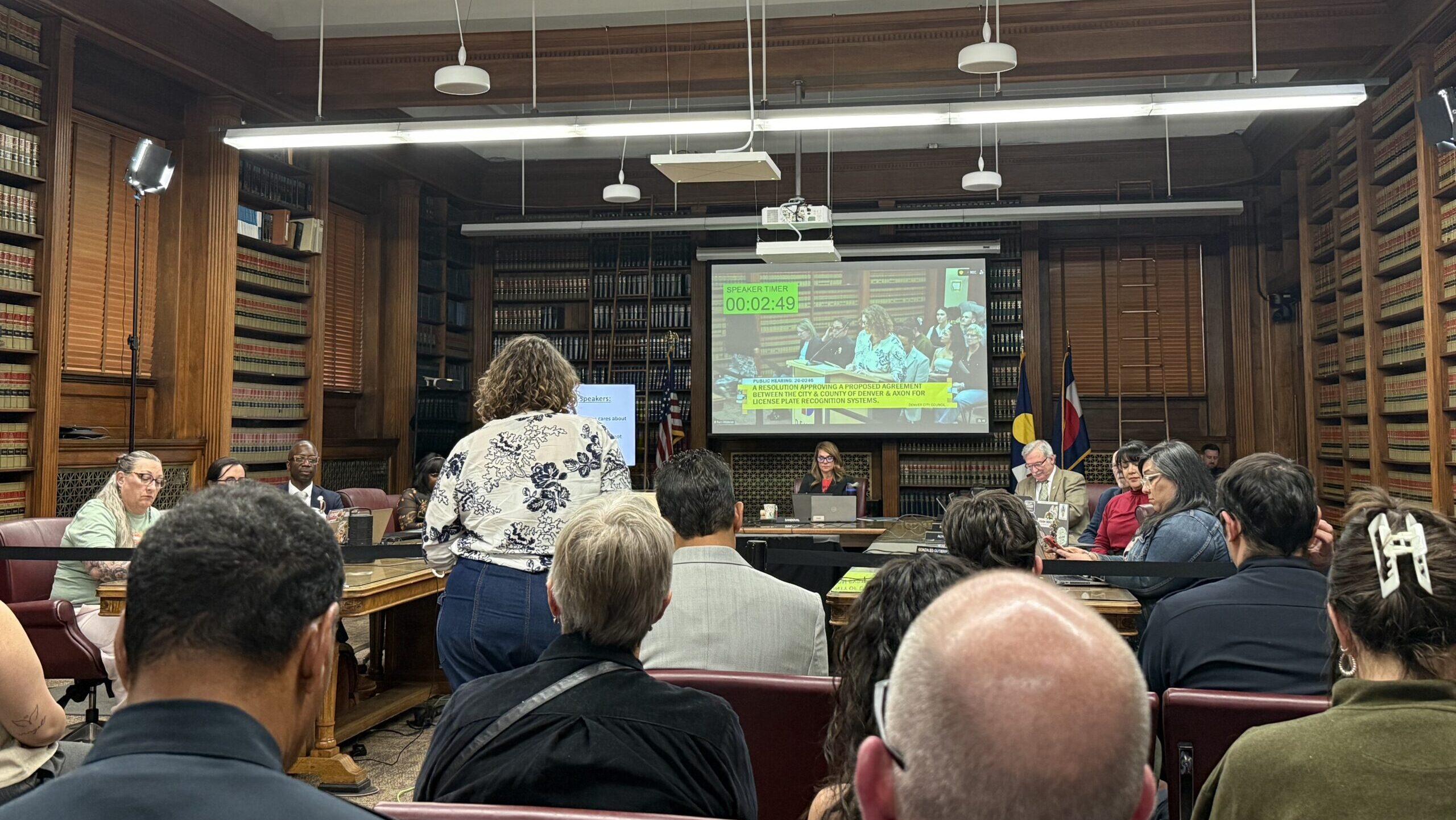
Public hearing during Denver City Council meeting regarding Denver's Axon contract. April 1, 2026.
Alongside its community partners, the ACLU of Colorado will continue to fight against dangerous mass surveillance by advocating for necessary regulations in Denver and across the state.
At a Glance: Colorado’s 2026 Legislative Session
Anaya Robinson, Public Policy Director
How we fought back against surveillance, rights violations, and more.
From government surveillance to constitutional rights abuses by federal officials and more, Coloradans have continued to face extraordinary threats to their rights. Our policy team, along with our partners, fought to enact protections against this overreach. We worked on 79 bills this session, spanning across our issue areas. Here are some key bills we worked on.
Fourth Amendment is Not for Sale Act
The Fourth Amendment is Not for Sale Act (FAINFSA) would have prohibited government entities from purchasing private personal data from third parties unless they have a judicial warrant. An amended version of FAINFSA would have sent this issue to Colorado voters. House Judiciary Committee members, however, postponed FAINFSA indefinitely.
Updated Municipal Jail Standards
Beginning on July 1, 2027, municipal jails must comply with current county jail standards. This means that all jails in Colorado must provide similar access to food, health care, legal services, and more. Municipal jails will also have to comply with existing jail data collection requirements. This law also strengthens protections for pregnant people in jail.
No Kings Act
The No Kings Act would have let people sue federal officials for federal constitutional rights violations, closing a long-standing accountability loophole. In the face of overwhelming opposition from Colorado district attorneys, Senate Judiciary Committee members postponed the No Kings Act indefinitely.
Consumer Protections for Artificial Intelligence
Beginning on January 1, 2027, companies must disclose when they use AI or other “automated decision-making technologies” in consequential decisions. This includes housing, lending, employment, and more. It also allows for developers of these tools to be looped in to lawsuits when discrimination occurs.
Look ahead
In the weeks and months to come, we’ll be releasing a legislative scorecard, a legislative session impact report, work in close collaboration with our advocacy department on upcoming ballot measures, and monitor statewide races.
Lobby Day 2026
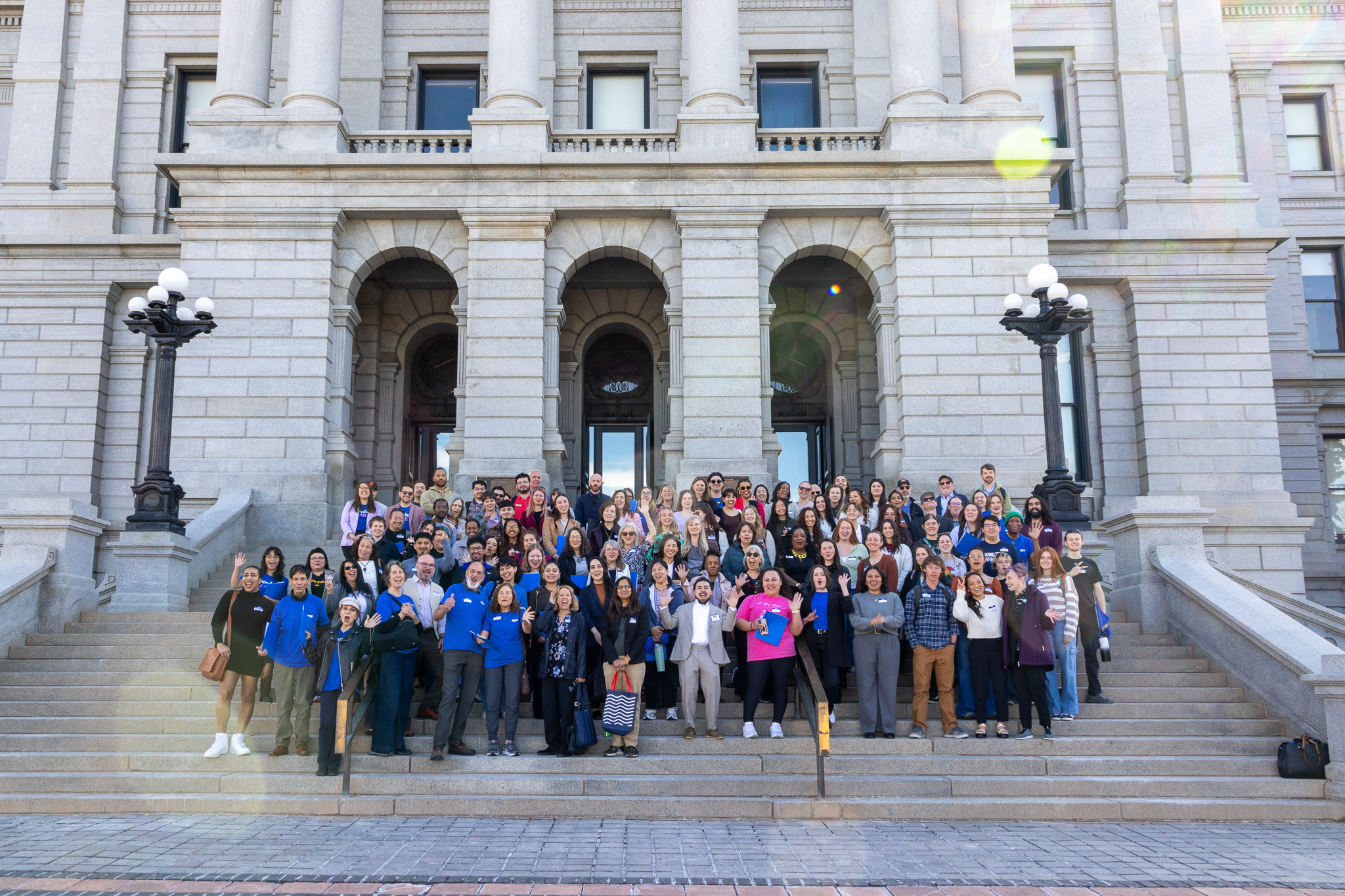
Lobby Day 2026 attendees on the steps of the Colorado State Capitol. March 10, 2026.
For this year’s Lobby Day, we mobilized over 100 activists to speak directly with lawmakers about critical civil rights safeguards. Students, organizers, and community members all urged lawmakers to protect Coloradans from mass surveillance, ensure fairness in our municipal courts, fight back against federal overreach, and more.
Legal Wins
ACLU of Colorado Achieves Major Victories in Several Cases Involving the Rights of Peaceful Protesters and Immigrants in Colorado
District Court Judge Issues New Order to Force ICE to Comply with Court Order and Federal Law for Warrantless Arrests
Significant progress has been made in the fight to put an end to Immigration and Customs Enforcement’s (ICE) wrongful practice of making unlawful warrantless arrests in Colorado. On May 13, 2026, a Colorado District Court judge found that ICE agents in Colorado have “materially violated” both the court’s own preliminary injunction order from November 2025 and federal law by continuing to make warrantless arrests in our state against the court order and federal law.
In November, the judge issued a preliminary injunction in Ramirez Ovando, et al. v. Noem, et al. ordering ICE to stop making warrantless arrests unless certain conditions were met — namely, that ICE agents make individualized, pre-arrest determinations about whether a noncitizen was likely to escape before a warrant could be obtained, as federal law requires. The judge also demanded that ICE turn documentation over to our organization to ensure the agency was acting in compliance with the court order. However, after months of ICE acting against the order, we, alongside our cooperating counsel from the Meyer Law Office, asked the court for a hearing to present evidence of ICE’s noncompliance.
In the two-day hearing in March, ICE agents we cross-examined admitted under oath that they had not received adequate training or communication about the court order. In corroborating internal ICE documents provided to our organization, ICE agents also admitted that they had continued to arrest people without determining if they posed a flight risk – which is required by federal law. Our legal team and cooperating counsel asked for a new court order that would include measures to make its initial injunction more fully enforceable.
In its May ruling, the court concluded that ICE had been acting in violation of the previous ruling, and that relief was warranted and necessary. The court-ordered relief requires ICE to develop and provide training for its officers on how to make arrests in compliance with the preliminary injunction, and mandated that all officers be trained within 45 days of the court ruling. ICE agents are prohibited from conducting warrantless arrests if they fail to complete this training within the court’s timeframe. In addition, any agents hired after May 12, 2026, cannot make warrantless arrests until they have undergone this training. The court also ruled that ICE must relinquish all documents related to warrantless arrests, including information about administrative warrants, when requested. The ruling ordered ICE to fulfill such requests within four days. Additionally, ICE now must supply a master list to our organization of all warrantless arrests that occur within Colorado every month.
Colorado Landlords Cannot Discriminate Against Immigrant Families
One of our cases is sending a loud and clear message to landlords in Colorado: discrimination, harassment, and intimidation of tenants based on their perceived immigration status will not be tolerated. A bankruptcy court judge has ordered the defendant, Avi Schwalb, in John Doe, et al. v. Schwalb, et al. to pay $182,000 in damages for, among other things, violating Colorado's Immigrant Tenant Protection Act (ITPA). The ITPA forbids landlords from intimidating, harassing, or retaliating against a tenant for asserting their rights. It also prohibits landlords from requesting information about a tenant’s immigration or citizenship status and disclosing or threatening to disclose such information to anyone, including immigration or law enforcement.
Schwalb discriminated against our clients based on their perceived immigration status. He rented them an unsafe and unsanitary unit, changed their apartment locks without notice or legal proceedings, and — when they asserted their rights as tenants — threatened to call immigration authorities. The court found that Schwalb’s blatant threats “showed malice, insult, and a wanton and reckless disregard for the plaintiffs’ rights and human dignity.”
Our lawsuit is not Schwalb’s only instance of violating state law. In a separate case, Schwalb was criminally sentenced in April 2026 after being convicted of defrauding dozens of customers.
The City of Denver Must Pay Protesters After Using Excessive Violence During Peaceful Protests
We secured a victory for the Denver protesters who were who were met with excessive violence by Denver police officers during peaceful protests of the murder of George Floyd in the summer of 2020.
This April, the U.S. Court of Appeals for the Tenth Circuit ruled that the city of Denver and the Denver police department were liable for violating the constitutional rights of protesters who were wrongfully and illegally harmed during protests against the murder of George Floyd in the summer of 2020.
Floyd was killed by police in Minneapolis, Minnesota that summer and people across the country took to the streets to speak out against police violence. In Colorado, tens of thousands of people expressed their legal right to protest, calling for racial justice and police reform — but they were met with unconstitutional and indiscriminate violence when the Denver police department deployed so-called “less lethal” weapons, including shotgun rounds and chemical weapons.
We sued the city of Denver and local police officers on behalf of the protesters who were injured by the police while peacefully demonstrating their First Amendment rights. Epps, et al. v. City and County of Denver, et al. challenged the use of less-lethal weapons that police unleashed against the protesters with no regard for safety, life, or the law.
A federal trial occurred in March 2022 and resulted in a precedent-setting $14 million jury verdict — but the defendants appealed the lower court's decision. On April 21, 2026, the Court of Appeals issued two decisions, affirming the jury’s verdict and affirming that the city of Denver is liable for unconstitutional uses of force and violations of the First and Fourth Amendments. The Court also upheld previous findings that the city’s failure to properly train officers led to unconstitutional violence and rejected the individual officer’s claims of qualified immunity.
Law Enforcement Cannot Subject Protesters to Unlawful Dragnet Searches
Our legal team notched another legal victory for protesters in Colorado. This time in Colorado Springs, where the Colorado Springs Police Department (CSPD) targeted Jacqueline “Jax” Armendariz Unzueta and the Chinook Center for their participation in a housing rights demonstrations in July of 2021, weaponizing minor criminal charges against Armendariz Unzuenta to execute dragnet search warrants. In February 2026, the Tenth Circuit Court of Appeals ruled in favor of Armendariz Unzuenta and the Chinook Center in Armendariz and Chinook Center v. City of Colorado Springs, et al.
In the ruling, the Court described the city’s search warrants as overbroad “wide-ranging exploratory searches,” and found that CSPD violated protected Fourth Amendment privacy rights.
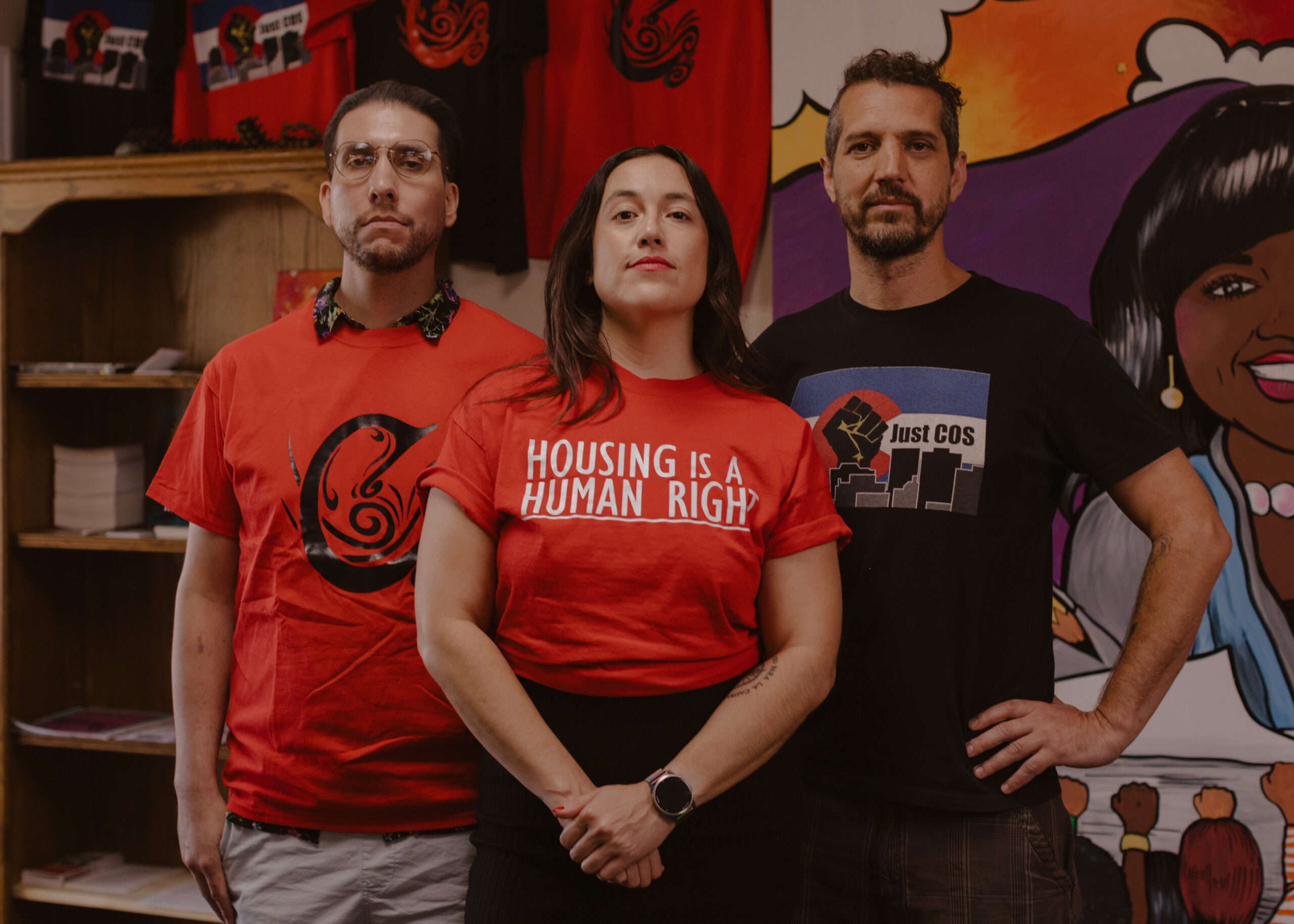
ACLU of Colorado clients from the Chinook Center.
After Armendariz Unzueta participated in the legal and peaceful demonstrations, the CSPD seized her computers, hard drives, and cell phones without probable cause. They also investigated the Chinook Center, which had previously been infiltrated by an undercover CSPD officer in 2020 as part of an FBI-led operation. The officer had posed as a volunteer to gain access to the community organizing space.
In August 2023, we sued the city of Colorado Springs, the Colorado Springs police officers involved, and the FBI, for these illegal searches and seizures. After a district court ruled in favor of the defendants in 2024, the ACLU appealed.
This decision makes it clear that illegal searches and seizures cause profound harm to the people subjected to them — and protecting citizens from such searches is a foundational principle of the U.S. Constitution. The city of Colorado Springs and its officers will now face accountability in further proceedings before the District Court.
New Litigation
ACLU of Colorado goes to Court for At-risk Children and voters’ rights in Colorado
Fighting for the Release of At-risk Children Being Wrongfully Held in Dangerous, Highly Restrictive Detention Centers
A federal class action lawsuit, brought in part by our organization, has alleged that Colorado state officials have knowingly incarcerating hundreds of children in dangerous, highly restrictive detention facilities for extended periods, in violation of their constitutional and statutory rights.
We joined ACLU National, Disability Law Colorado and Children's Rights, and law firm Ropes & Gray, to bring the suit against Colorado Governor Jared Polis and Michelle Barnes, the Executive Director of the Colorado Division of Human Services (CDHS).
In the past, juvenile court judges have found that these children should be released to the community, rather than languishing in pretrial detention. Internal records, state reports, and youth interviews have found that children confined in juvenile detention facilities are subject to physical restraints, isolation, routine strip searches, and excessive force. Colorado's own statutes recognize the myriad negative impacts detention has on the wellbeing of children. The lawsuit alleges that this illegal detention of the state's most vulnerable children has been ongoing for years. It comes after repeated community calls to CDHS to fulfill their legal obligation to release children from confinement and instead provide community placement and other services.
Children in foster care are particularly at risk and have been found to be locked up for minor charges solely because the state has failed to fulfill its obligation to provide appropriate services. Research has also found that many children who should be released have disabilities, making them especially vulnerable to the consequences of confinement.
Protecting Colorado Voters’ Private Data from Government Overreach
We have joined ACLU national in a legal fight to protect the privacy rights of Colorado voters. The Trump administration filed a lawsuit against Colorado Secretary of State Jena Griswold in December 2025 to try and obtain voters’ sensitive personal data, after Griswold rightly refused to hand over private data that was not required by law.
In response, our organizations filed a motion to intervene on behalf of two Colorado voters, and voters’ rights organization Common Cause, to prevent the Department of Justice (DOJ) from obtaining Colorado voters’ personal data, our intervention seeks to prevent the DOJ from obtaining sensitive voter data that is protected under state and federal law — including voters’ full names, dates of birth, addresses, driver’s license numbers, and partial Social Security numbers.
Our motion argues that, in addition to threatening voter privacy, the DOJ's requests could also enable unconstitutional voter disenfranchisement. Naturalized citizens and persons whose voting rights have been restored after a felony conviction are frequently wrongly flagged as ineligible voters. In November, federal officials acknowledged that the DOJ shared voter information with the Department of Homeland Security for immigration enforcement. This intervention joins similar lawsuits supported, brought or intervened in by the ACLU Voting Rights Project in Nebraska, New Mexico, Maryland, Rhode Island, Pennsylvania, and Minnesota.