
This commentary is by Olivia Mendoza, executive director of the ACLU of Colorado.
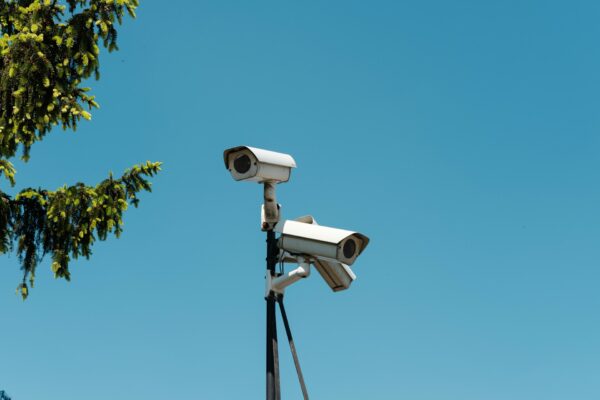
Cities across the state and nation are quietly building a mass surveillance infrastructure, one unregulated contract at a time. Our most vulnerable communities are falling victim to this rapidly advancing technology, which threatens the constitutional rights of people across Colorado, including in Boulder.
This mass surveillance infrastructure has the power to track where you go, who you are with and what you do, with almost no legal guardrails. These technologies are not being used in isolation. Corporations implementing mass surveillance systems may offer several tools, including drones, body cameras and automatic license plate readers, or ALPRs. Data from these systems can be integrated and, depending on an agency’s policies and settings, shared across jurisdictions.
The surveillance technology market is exploding, and law enforcement and government agencies are among its biggest customers.
The City of Boulder is currently reviewing several proposals for a new long-term ALPR contract. City officials have declined to name the bidders, and there is no public comment period dedicated to the decision. The city initially expected to select a vendor in September, but the timeline is now unclear. Officials are expected to make the decision without a council vote or any formal mechanism for Boulder residents to weigh in.
Currently, Boulder holds a contract with Flock Safety for more than 30 cameras at key intersections. Until June 2025, Boulder’s license plate data was searchable by thousands of law enforcement agencies nationwide. According to city records, U.S. Border Patrol searched Boulder’s data more than 100 times before the city cut off national sharing.
One likely bidder in Boulder’s procurement process is Axon. The city already uses other Axon products, including an AI tool that transcribes body-camera footage, and requires the selected ALPR system to integrate with its existing Axon technology.
A major federal law enforcement contractor, Axon has rapidly expanded from manufacturing Tasers and body cameras into ALPRs, drone fleets and real-time streaming capabilities that stitch together a continuous picture of people’s movements through public space.
This escalation in surveillance was predicted years ago, not by outside critics, but by Axon’s own Artificial Intelligence and Policing Technology Ethics Board. In 2019, that board warned that without regulatory intervention, market competition would encourage “a race to the bottom of more pervasive and more powerful surveillance.”
Three years later, nine of the board’s 12 members resigned after Axon announced plans to develop Taser-equipped drones despite the board’s objections. In their resignation letter, they wrote that the company had proposed surveillance so sweeping it would “undoubtedly harm communities of color and others who are overpoliced.”
When a company’s own ethics board quits in protest, that is not a footnote. It is a warning we should all heed.
Surveillance technology is not experienced equally. Facial recognition systems, now being rebranded as “face matching,” have documented error rates significantly higher for people with darker skin. People of color are disproportionately impacted by this mass surveillance technology that saturates their neighborhoods. Across the country, facial recognition errors have contributed to wrongful arrests, with devastating consequences for some of those misidentified.
ALPRs build a record of movement over time: where you worship, seek medical care or attend a political meeting. Each observation may appear to be a simple data point. But aggregated over months, those observations can create a detailed map of your life, one that federal agencies can use to target immigrant communities. Some surveillance systems provide real-time or near-real-time alerts, potentially giving law enforcement the ability to track individuals as they move through the world, without a warrant, without suspicion and without their knowledge.
The gap between what these tools can do and what the law regulates is not merely a matter of timing. It is, in many cases, deliberate. Vendors move fast, offering free pilots and subsidized trials that make it easy to implement their systems but costly to end them. By the time a community learns that a technology has been deployed, it may have been running for months, if not years.
One of the central deceptions of the surveillance industry’s marketing is the suggestion that public safety and civil liberties are competing priorities. They are not. Effective, accountable policing and robust civil liberties protections can coexist if city officials do the hard work of establishing clear guardrails before technologies are deployed.
Boulder should establish binding rules, mandatory impact assessments, meaningful public input, independent oversight with real authority and enforceable vendor accountability before making its procurement decision. Every contract signed without adequate safeguards sends a clear message: Coloradans’ civil liberties are not a priority. Networked surveillance represents one of the most significant expansions of government power in the history of the United States, and Boulder should treat it accordingly.
Just because this technology exists doesn’t mean the Constitution no longer does.
This article was originally published by the Boulder Reporting Lab